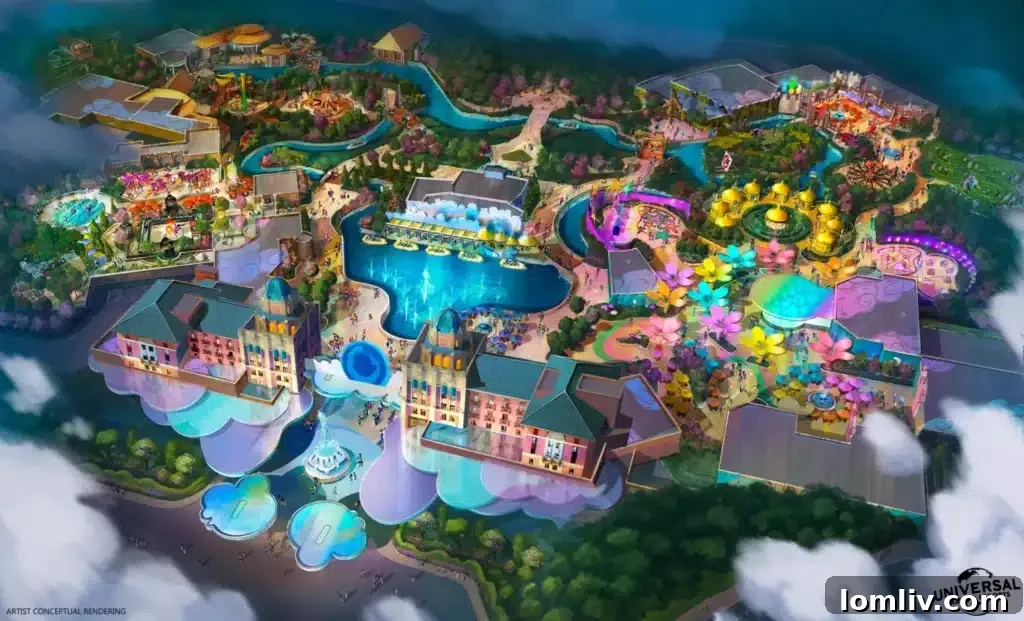
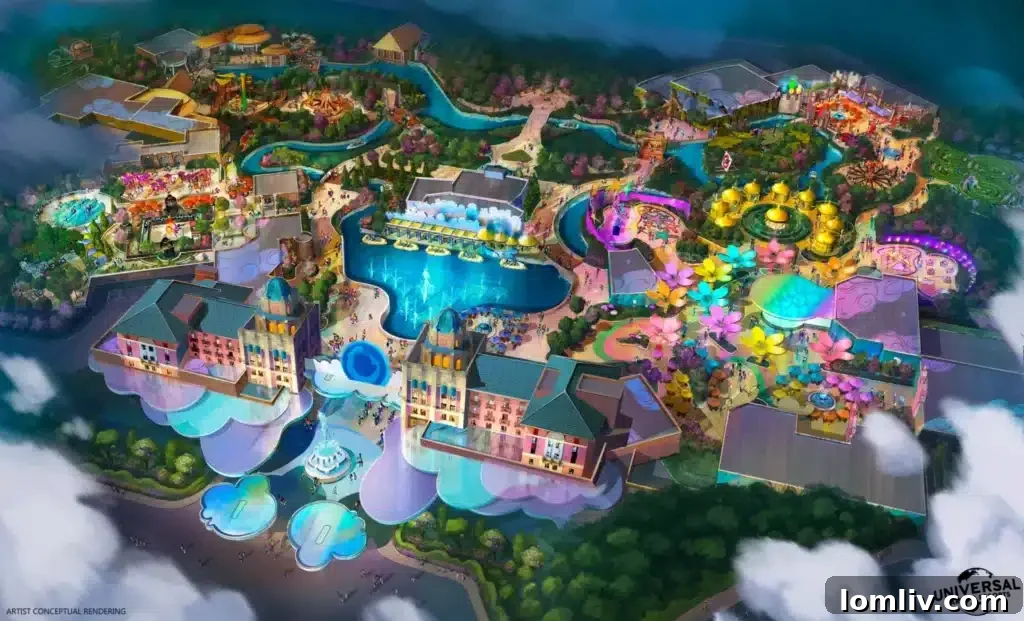
The morning of January 11 brought a surprising revelation to many North Texans: Universal Parks and Resorts was poised to open a unique theme park concept in Frisco, Texas. This unexpected announcement quickly dominated news feeds, transforming what seemed like a distant possibility into a tangible reality for one of the nation’s fastest-growing cities.
Frisco, celebrated for its rapid expansion and reputation as an ideal location for both professional growth and raising a family, welcomed the news with enthusiasm from city leadership. Mayor Jeff Cheney highlighted the project’s potential in a press release, stating, “This new Universal concept will continue to enhance our tax base, expand employment opportunities and bring even more fun to Frisco benefiting our residents, businesses, and visitors.” The proposed park is not just another entertainment venue; it’s a strategic investment poised to bolster Frisco’s economic landscape and solidify its standing as a premier destination.
The project moved swiftly from concept to a more concrete phase on March 7, when the Frisco City Council approved the necessary Special Use Permit (SUP). This pivotal decision cleared the path for Universal to commence detailed planning and development on a nearly 100-acre parcel located within The Fields development, specifically at the southwest intersection of Panther Creek Parkway and the Dallas North Tollway. This prime location places the park within a rapidly developing area, promising accessibility while also raising questions about local impact.
Distinct from its massive counterparts in Orlando or Los Angeles, this Frisco park is meticulously designed for a younger demographic, specifically targeting children between the ages of 3 and 9. At approximately one-quarter the size of Universal’s larger resorts, this innovative concept aims to offer a more intimate, manageable, and immersive experience tailored to families with young children. This deliberate scaling and audience focus are key elements that differentiate the Frisco project and were central to its appeal to city officials, despite the challenges that would soon emerge from local residents.
Navigating Local Opposition: Not a Walk in The Park
While the prospect of a Universal theme park brought excitement to many, its journey through the approval process was far from smooth. The city and Universal envisioned a decades-long enjoyment for this new attraction, but a significant portion of Frisco residents voiced strong displeasure, particularly during the crucial March 7 city council meeting. Their concerns centered on several critical issues: the park’s specific location within a burgeoning residential area, the inevitable increase in traffic, and a perceived lack of adequate time and information from Universal regarding the project’s true impact.
Among the Frisco City Council members, Brian Livingston and Laura Rummel stood out as the two dissenting votes against approving the SUP. Livingston, acknowledging the project’s inherent quality, ultimately concluded it was “being put in the wrong place for me.” His primary apprehension revolved around the anticipated adverse effects on the neighboring Cobb Hill area, fearing that the influx of activity could transform the residential character of the community, potentially leading to a rise in investor-owned properties and rentals. Despite Universal’s stated intentions, Livingston expressed an inability to support the project’s current location, emphasizing the importance of preserving established neighborhoods.
Laura Rummel, the other dissenting council member, advocated for tabling the decision on March 7. Her request stemmed from a desire to await a formal contract between Universal and the city, ensuring that all promised concessions to the residents of Cobb Hill would be legally binding and fully implemented. In a subsequent interview, Rummel reflected on her stance, reiterating her wish for a delay but acknowledging the council’s need to “make decisions and move forward” eventually. Her position underscored a broader sentiment among some residents and council members for greater assurances and a more deliberate process.
Frisco resident and local business owner John Pavel, a prominent voice in opposition at the March 7 meeting, articulated a common frustration: the public’s unawareness of the plan until the January 11 press conference. He described the project as being “thrown on us” and characterized the swift approval process as “unprecedented” in its speed. This perception of a rushed decision-making process fueled much of the public’s apprehension and distrust.
Deputy Mayor Pro Tem Angelia Pelham, reflecting on the process during the March 7 meeting, candidly admitted, “Do I think that we could have done this differently? Absolutely. Did we come forth in a manner that gave the impression that this was a conclusive decision and that this was a done deal? Perhaps. Lesson learned.” Pelham acknowledged the city’s missteps in communication and transparency, highlighting efforts to “course correct” by subsequently organizing listening sessions to engage directly with residents and address their concerns. These sessions, while belated for some, aimed to foster a more open dialogue and rebuild community trust.
Unpacking the Timeline: Frisco Universal Park Discussions Beyond the Public Eye
The swift public approval of the Special Use Permit, occurring less than two months after the initial announcement, led many to believe the project was hastily conceived. However, Council member Laura Rummel offered a different perspective, revealing that discussions surrounding this ambitious project had been ongoing for “many months” prior to January 11. She explained that initial conversations were typically handled by the city’s economic development corporation before being formally presented to the city council. This “regular protocol,” as Rummel described it, involved Universal proactively reaching out to Frisco, signaling their interest in the thriving North Texas market.
Rummel further clarified that the impression of a “done deal” or a seven-week turnaround from inception to approval was fundamentally incorrect. While the public learned of the project in January, the council and city officials had been engaged in preliminary discussions and evaluations long before that. This behind-the-scenes engagement is standard for projects of such magnitude, balancing the need for confidentiality during initial negotiations with eventual public disclosure. Rummel emphasized that details surrounding the theme park were still being meticulously worked through, indicating an ongoing, dynamic process rather than a finalized plan pushed through without scrutiny.
Initially, the concept of a major theme park elicited skepticism from Rummel and some of her council colleagues, with her initial reaction being a decisive “nope.” This sentiment was born from an immediate assessment of the potential impact on the community, particularly concerning scale and scope. However, the council’s stance began to soften significantly upon learning the specific details of Universal’s proposal: a smaller, family-focused park tailored for a younger audience. This unique concept, distinct from Universal’s mega-resorts, presented a less intrusive and more compatible fit for Frisco’s demographics and existing development patterns, ultimately swaying opinions within the council.
“It has the potential to be a really good project,” Rummel conceded, underscoring the council’s ongoing responsibility to maintain robust dialogue with Universal. This continuous engagement is crucial to ensure that all agreed-upon standards, commitments, and community safeguards are not only met but rigorously upheld throughout the development and operational phases. The delicate balance between fostering economic growth and protecting community interests remains a paramount concern for Frisco’s leadership.
Cobb Hill Neighborhood: A Stand Against Theme Park Proximity
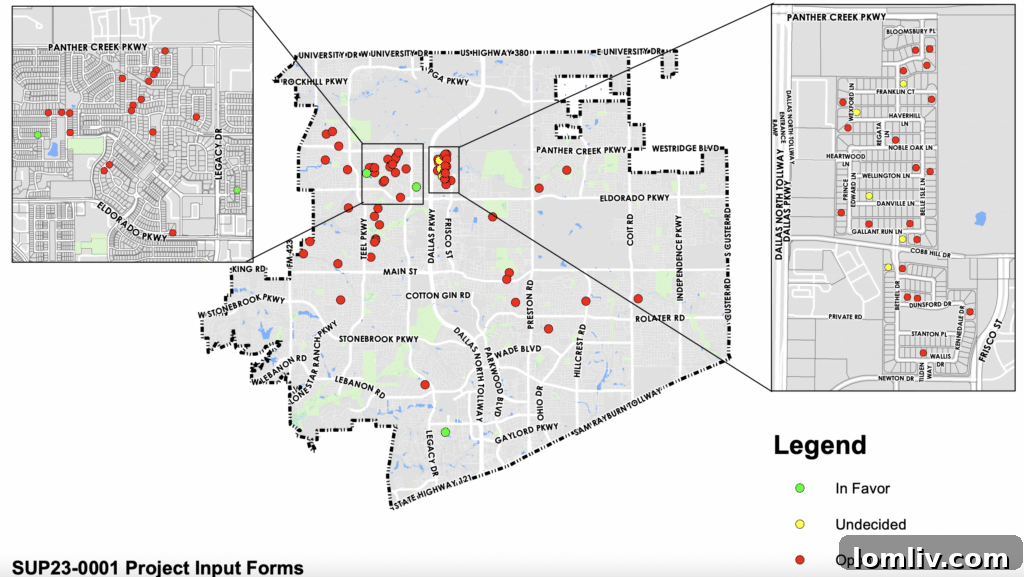
The proposed Universal theme park’s proximity to the Cobb Hill neighborhood has ignited a fierce opposition movement among its residents, forming a significant hurdle in the project’s path. John Pavel, a vocal opponent, highlighted the pervasive sentiment against the plan within Cobb Hill, a sentiment demonstrably quantified by the city’s own data: a staggering 95 out of 97 Special Use Permit approval forms submitted by residents were in opposition to the theme park. This near-unanimous rejection underscores the deep-seated concerns and anxieties felt by those who would be most directly impacted.
Pavel argued that Frisco’s pressing need lies more in additional housing opportunities rather than a theme park, contending that the proposed development would detrimentally affect property values in Cobb Hill. His poignant question, “Who wants to live in a neighborhood that backs up to a theme park?” encapsulates the core fear that the residential tranquility and appeal of the area would be irrevocably altered, leading to a decline in home values and a shift in neighborhood character. The prospect of living adjacent to a bustling entertainment venue, with its associated noise, traffic, and crowds, is fundamentally at odds with the vision many residents had for their homes and community.
Council member Laura Rummel acknowledged the highly specific and acute nature of the concerns emanating from Cobb Hill residents. Key among these worries is the potential for the neighborhood to inadvertently transform into a free parking lot for theme park visitors or a convenient staging area for rideshare drivers. Such scenarios would not only disrupt daily life but also compromise the safety and residential feel of the community. These concerns necessitate concrete and enforceable solutions from Universal to mitigate external impacts on the adjacent residential zones.
In response to these specific fears, Universal made a significant commitment: the construction of a robust retaining wall designed to create a physical and acoustic barrier separating the Cobb Hill neighborhood from the theme park. Rummel noted that Cobb Hill’s current community design, which doesn’t feature a full perimeter wall, works primarily because its only adjacent area has historically been an open field. “This is great now,” she commented, but recognized that the situation would drastically change when that serene, open expanse transforms into a hotel and theme park complex. The retaining wall is intended to provide a necessary buffer, but for many residents, it’s a minimal concession against a much larger, unwanted change.
Despite the council’s approval, John Pavel asserted that “the residents of Frisco haven’t given up yet,” indicating ongoing community organizing efforts. These efforts potentially include gathering enough signatures to initiate a referendum or other legal avenues to block the theme park from moving forward. This demonstrates the enduring determination of the opposition to protect their community and underscores that the city council’s vote, while significant, may not be the final word in this unfolding saga.
The Road Ahead: What’s Next for Universal’s Frisco Park
With the Special Use Permit secured, the project now transitions into its next critical phases, which involve a meticulous and often lengthy process of detailed planning, design, and regulatory approvals. Frisco city officials have indicated that developers, including Universal Parks and Resorts, are responsible for determining when their comprehensive plans are sufficiently developed to be submitted to the City of Frisco for thorough review. This submission will encompass architectural drawings, engineering schematics, traffic impact studies, environmental assessments, and detailed operational plans, all of which must comply with local zoning ordinances, building codes, and community development standards.
The timeline for these submissions and subsequent approvals is not fixed, as it depends on the complexity of Universal’s designs and their readiness to meet the city’s rigorous requirements. This iterative process often involves multiple rounds of review, feedback, and revisions before final permits are issued, allowing construction to commence. Throughout this period, there will be ongoing dialogue between Universal, city departments, and potentially the community, as finer details of the park’s integration into the Frisco landscape are ironed out.
Key areas of focus in the upcoming phases will undoubtedly include comprehensive traffic management plans to alleviate concerns around congestion on the Dallas North Tollway and local roads, particularly near the Cobb Hill neighborhood. Additionally, measures to manage noise, lighting, and waste generated by the park will be crucial. Universal’s committed concessions, such as the retaining wall, will need to be detailed and integrated into the final development plans, with city oversight ensuring these promises are materialized effectively.
While the City Council has made its decision on the SUP, the journey is far from over. The ongoing involvement of residents, particularly those in affected neighborhoods like Cobb Hill, remains a vital part of Frisco’s democratic process. Their collective efforts to gather signatures or continue advocacy demonstrate a powerful desire to influence the project’s outcomes and ensure that their voices are heard at every stage of development. The balance between welcoming major economic drivers and preserving the quality of life for existing residents will continue to be a central theme as Universal’s Frisco park takes shape.
As of the time of this publication, Universal Parks and Resorts have not issued further public comments in response to requests, indicating that they are likely focused on the internal development of their plans and preparing for the next phases of engagement with the City of Frisco.