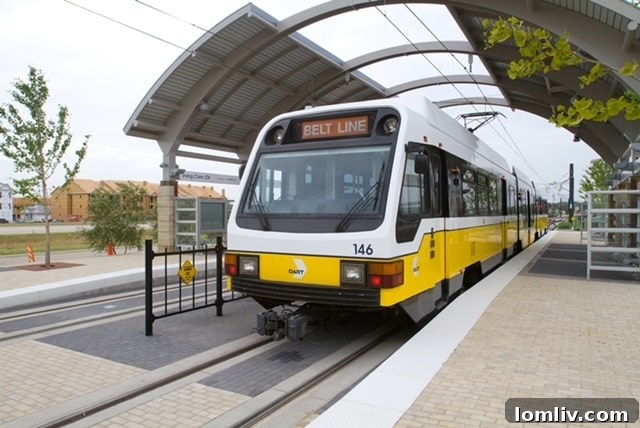
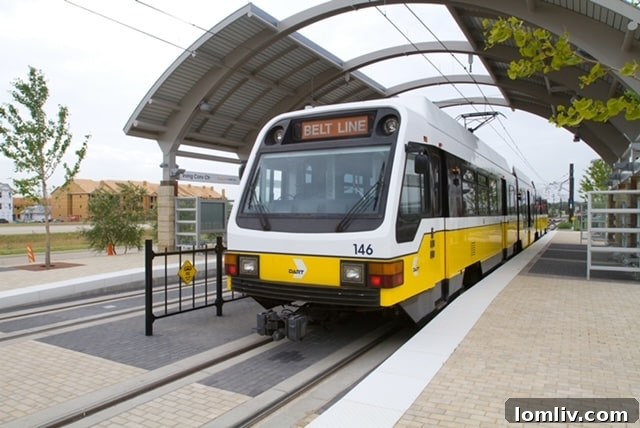
In the vibrant and ever-expanding metropolis of Dallas, reliable public transportation isn’t merely a convenience; for countless residents, it serves as an indispensable lifeline. Consider Cindy, a resident of a sober-living home in Dallas, whose daily rhythm is intricately tied to the Dallas Area Rapid Transit (DART) system. With a part-time job that responsibly covers her reduced rent and a dedicated commitment to regular volunteer work, Cindy possesses a valid Texas driver’s license. Yet, like many urban dwellers, she faces the pragmatic challenge of not being able to afford a car. For individuals like Cindy, DART isn’t just an alternative mode of travel; it is the fundamental infrastructure that enables her to navigate her life with independence and dignity.
Each month, Cindy thoughtfully allocates $48 – a compassionate rate specifically offered to disabled and senior citizens – to access DART’s comprehensive network. Regardless of the weather, be it the scorching Texas sun or a sudden downpour, she consistently swipes her pass, embarking on journeys from her home to her workplace and back again. Her story is mirrored by approximately 220,000 daily commuters spanning 13 member cities who depend on the extensive DART bus and train system. A DART stop, conveniently situated near her residence, combined with the user-friendly “on-call” service (officially known as GoLink), ensures she can travel efficiently from key transit hubs like the Arapaho Station in Richardson directly to the retail store where she is employed, effectively bridging crucial “first-mile, last-mile” transportation gaps that often deter public transit use.
For Cindy, the impact of DART transcends mere commuting. “Without DART,” she articulates, “I don’t have a chance of getting to doctor appointments, maintaining my job, and keeping my housing. It’s a blessing.” She even finds a measure of peace during her travels, adding, “And the train ride is relaxing.” This heartfelt sentiment powerfully underscores the profound role public transit plays in fostering independence, ensuring access to healthcare, securing employment, and maintaining stable housing for a vulnerable yet vital segment of the population, who might otherwise confront insurmountable daily barriers.
However, the DART experience, like any large-scale urban transit system, is not without its complexities and challenges. Cindy candidly acknowledges these realities: “When it’s cold or super hot, the homeless people sleep on the train, but DART police keep watch over the trains. There’s a lot of crime at the DART stations. Sometimes there’s people shooting dope or urinating in the elevators. They have security, but there’s a lot of crime.” These honest observations illuminate a critical facet of urban public transportation – the unavoidable intersection of mobility, prevalent social challenges such as homelessness, and the ongoing imperative for robust public safety measures.
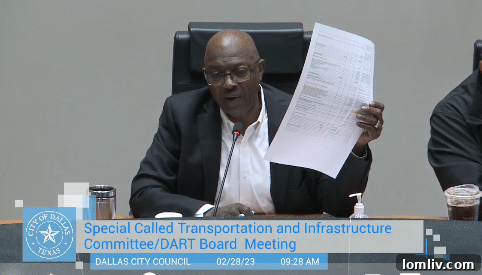
Official figures released by DART substantiate some of these public safety concerns, indicating a notable increase in incidents. In 2022, DART facilities recorded a total of 996 arrests, marking a significant 15.7 percent increase over the preceding year. This rising trend has naturally placed considerable pressure on DART leadership to prioritize and enhance rider safety and comfort across the entire system. Nadine Lee, DART’s esteemed President and CEO, has proactively addressed these issues, publicly emphasizing her administration’s unwavering focus on augmenting security protocols, improving cleanliness standards, and bolstering reliability for all passengers. During a crucial February 28 meeting of the Dallas Transportation and Infrastructure Committee, Lee outlined several proactive measures, including an innovative program that employs “formerly unhoused” individuals as porters to meticulously maintain the cleanliness of trains seven days a week. This forward-thinking initiative not only ensures a more pristine and welcoming transit environment but also provides meaningful employment pathways, with several porters successfully transitioning into full-time roles with DART’s contracted cleaning services – a compelling testament to DART’s commitment to both operational excellence and impactful community engagement and social responsibility.
Navigating Growth and Governance: The Dallas Area Rapid Transit & City Conflict
As DART diligently works towards system-wide enhancements and continues its ambitious expansion trajectory, a significant and increasingly tense dispute has emerged between the transit agency’s leadership and the City of Dallas. This escalating conflict centers on the allocation of leftover sales tax revenue, a vital financial component that holds substantial importance for both entities’ operational budgets and future development plans.
Last November, the DART board initially agreed to disburse a portion of its excess sales tax revenue to its 13 member cities. The City of Dallas, being a primary contributor and a major beneficiary of DART services, was eagerly anticipating an estimated $111 million share from this distribution. This substantial sum was not merely an unexpected bonus; it was earmarked by Dallas city administrators for a series of crucial urban development projects and public services. These included the installation of essential ADA-compliant ramps and sidewalks to significantly enhance accessibility for all citizens, vital upgrades to traffic signals along major transit corridors for improved urban flow and safety, the launch of an innovative pilot program designed to cover student fares to promote youth ridership, and a comprehensive study exploring the repurposing of underutilized DART lots into dynamic, mixed-use developments that align with modern urban planning principles of density and sustainability.
However, the optimistic outlook for Dallas quickly diminished. Late last month, DART officials unexpectedly backpedaled on the initial allocation, announcing a significant and disheartening reduction in the figure previously promised to the city. This abrupt change triggered a wave of profound concern and understandable frustration within Dallas city leadership, leading to serious questions regarding the fairness, transparency, and operational integrity of DART’s revised financial plans.
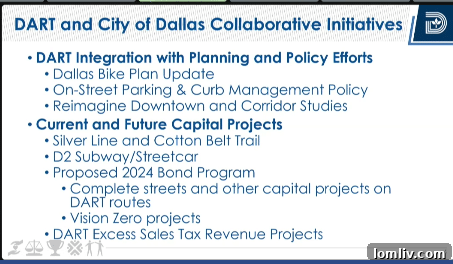
DART President and CEO Nadine Lee attributed this reduction primarily to what she described as persistent and costly delays on the part of the City of Dallas. Lee specifically claimed that the city had repeatedly failed to provide timely comments on critical design reviews for the upcoming Silver Line project and had not issued necessary construction permits within agreed-upon time frames. She cited alarming instances where city officials took an astonishing 290 days to respond to requests, a stark contrast to the mere 10-day period stipulated in the interlocal agreement governing their long-standing partnership. These substantial delays, according to DART, carry tangible and significant financial consequences. Lee further speculated that each day DART waits for city approval on design work and construction permits costs the agency approximately $150,000. These daily costs accumulate rapidly, putting immense strain on project budgets, jeopardizing timelines, and ultimately impacting the efficiency of public funds.
Further exacerbating the already strained relationship, the DART CEO controversially insinuated that the city’s observed delays were not simply a matter of bureaucratic inefficiencies but rather a calculated negotiation tactic – a serious accusation that was vehemently refuted by Dallas administrators, who maintain their commitment to due process and good governance. The Silver Line commuter rail, a pivotal regional project designed to extend vital transit services from Plano to DFW Airport and encompassing approximately three miles through far North Dallas, has already seen DART invest a substantial $36 million in project enhancements. As reported by the Dallas Observer, DART is now effectively holding the reduced sales tax allocation “hostage,” demanding that the city first settle this $36 million bill for what DART terms “betterments” before releasing the full, originally promised funds. This aggressive and confrontational stance has undeniably fueled the escalating conflict, pushing a critical partnership between two vital urban entities to a precarious breaking point, with potential long-term repercussions for regional development and public trust.
Partnership on the Brink: Bridging the Divide Between DART and Dallas
The intricate relationship between DART and the City of Dallas, historically characterized by interdependence and shared goals, now finds itself at a critical juncture. The ongoing dispute over finances, project timelines, and perceived procedural delays has led both entities to accuse the other of being an unreliable partner, creating an atmosphere where some Dallas officials believe that a form of “marriage counseling” is urgently needed to restore trust, facilitate constructive dialogue, and enable tangible progress on essential urban development.
At its core, the fundamental reality remains: DART intricately links downtown Dallas with its diverse surrounding neighborhoods, providing an indispensable service that hundreds of thousands of residents rely upon daily for work, healthcare, and social connections. Conversely, DART’s ambitious expansion plans and continued operational efficiency are heavily dependent on the City of Dallas’s unwavering cooperation. This dependency is particularly evident as new rail lines are laid, existing roads require rebuilding or modification, and complex infrastructure integrations become necessary, all of which necessitate seamless collaboration on permitting, design reviews, and land use planning. A breakdown in this relationship stalls not just projects, but the economic and social fabric of the entire region.
Recognizing the profound gravity of the situation, District 1 Councilman Chad West confirmed that a dedicated working group has been swiftly convened. This crucial group includes esteemed Council members Tennell Atkins, Jaynie Schultz, and Jesse Moreno, who are specifically tasked with “continuing to work with DART and neighboring cities on steps to resolve the [interlocal agreement] and withheld tax revenues.” The formation of this task force undeniably underscores the city’s earnest commitment to finding a pragmatic and timely resolution, yet even this effort has faced internal friction. District 12 Councilwoman Cara Mendelsohn, whose constituency encompasses the critical Silver Line area—the very epicenter of many of these disputes—requested to join the working group but was reportedly rejected by District 6 Councilman Omar Narvaez, who chairs the influential Transportation and Infrastructure Committee and oversees such assignments. This exclusion further complicates the collaborative dynamic, raising legitimate questions about inclusive representation and equitable problem-solving.
The sentiment from Dallas officials regarding DART’s unexpected $36 million invoice for “betterments” was unequivocally negative and strongly articulated during the pivotal February 28 Transportation and Infrastructure Committee meeting. City Manager T.C. Broadnax candidly expressed the city’s profound dismay, stating, “It’s not fair to this council and, I think, a little disturbing. It is something that I would never do as a person in a partnership… I would not be comfortable agreeing to an exaction for retroactivity for an unknown, unannounced, and unshared burden.” This forceful rebuttal indicates a fundamental disagreement not just on the disputed financial amount, but on the core principles of partnership, transparency, and fair financial practices, suggesting that DART’s demand for retroactive payment for project enhancements was perceived as an unprecedented, unacceptable, and trust-eroding move that could set a dangerous precedent for future collaborations.
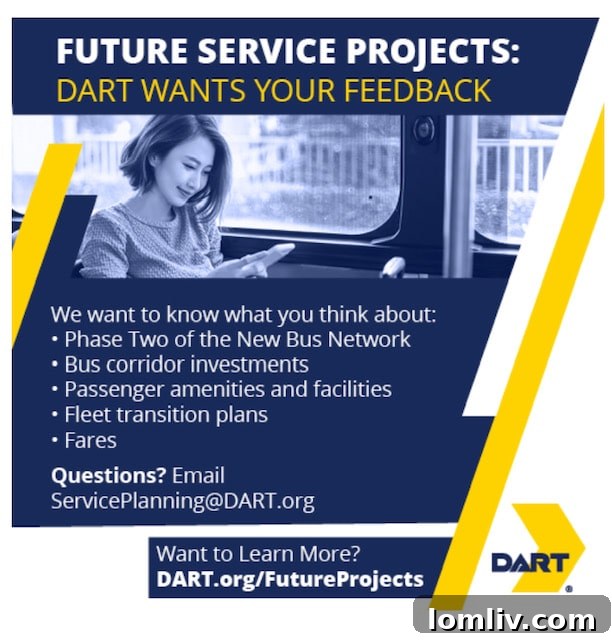
In a constructive response to the escalating tensions and to ensure community voice, DART proactively conducted several public workshops throughout March, specifically aiming to gather valuable feedback on the expansion of the Silver Line and to engage directly with the communities it serves. The outcomes of these public consultations, alongside the ongoing, high-stakes negotiations spearheaded by the city council’s working group, are eagerly awaited by all stakeholders. The path forward for this critical regional partnership will undoubtedly be profoundly shaped by these intense discussions, carrying the potential for either a renewed, stronger, and more resilient collaboration or a prolonged and damaging impasse that could hinder Dallas’s urban development for years to come.
Councilman Atkins powerfully articulated the urgency of the situation, emphasizing the alarming financial bleeding caused by the protracted delays: “I need a timeline, a deadline, because we’re losing $150,000 a day. Get in a room and get this resolved. We’re not getting $111 million. We might get $50 million. We might get zero. One thing I know is that the Silver Line is still going to get built, but the City of Dallas is going to lose money. Get in a room, clean it up, and give me a timeline.” His impassioned plea starkly highlights the significant fiscal risk to Dallas and the undeniable imperative for immediate, decisive action. In a formal effort to keep the council comprehensively informed and to continually push for a resolution, Assistant City Manager Robert Perez issued a detailed March 24 memo to the Dallas City Council, providing a succinct yet critical update on the ongoing negotiations under the telling heading, “Discussions of Betterments and Permit Review Delays.” This official document serves as a formal acknowledgement of the severe challenges faced and the absolute necessity to find common ground for the benefit of all Dallas residents and the wider North Texas region.
Shaping Dallas’s Future: The Promise of Transit-Oriented Development (TOD)
Beyond the immediate financial and operational disputes, the City of Dallas’s intricate partnership with DART is fundamentally critical for long-term urban planning and sustainable growth, particularly in the vital realm of Transit-Oriented Development (TOD). TOD is a visionary urban planning strategy that advocates for the creation of compact, walkable, and mixed-use communities intentionally clustered around high-quality public transportation systems. Its core objectives are to maximize convenient access to transit, promote diverse and affordable housing options, significantly reduce reliance on private vehicles, and foster vibrant, economically resilient, and environmentally sustainable neighborhoods that enhance the quality of life for their residents.
For Dallas residents like Hexel Colorado, a dynamic blogger, podcaster, software developer, and self-described “amateur urbanist,” TOD isn’t merely an academic concept – it’s a tangible, lived reality. Approximately a year ago, Hexel made the conscious and environmentally responsible decision to give up his Prius, opting instead for a DART monthly pass at a cost of $96. He seamlessly integrates his electric commuter bike for daily trips from his Old East Dallas apartment to the nearest transit station. His personal experience powerfully exemplifies the ideal scenario TOD strives for: reducing one’s personal carbon footprint, realizing substantial savings on transportation costs, and experiencing the city in a more connected, active, and community-oriented way. This lifestyle choice, increasingly replicated by numerous urban residents, profoundly underscores the myriad tangible benefits of thoughtfully planned and integrated transit infrastructure.
A DART rider generously shared with daltxrealestate.com that DART’s innovative on-call service, GoLink, functions remarkably similarly to popular ride-sharing platforms like Uber, offering travelers highly convenient and flexible connections between their homes and transit stops. Gordon Shattles of DART External Relations further clarified a crucial detail for us: DART’s GoLink service is, in fact, available to eligible customers at no additional cost, provided they possess a valid DART fare. This invaluable “first-mile, last-mile” service effectively eliminates a significant barrier to public transit use, making DART accessible and convenient even for those residing slightly off the main routes, thereby significantly broadening DART’s reach, utility, and positive impact on community mobility.
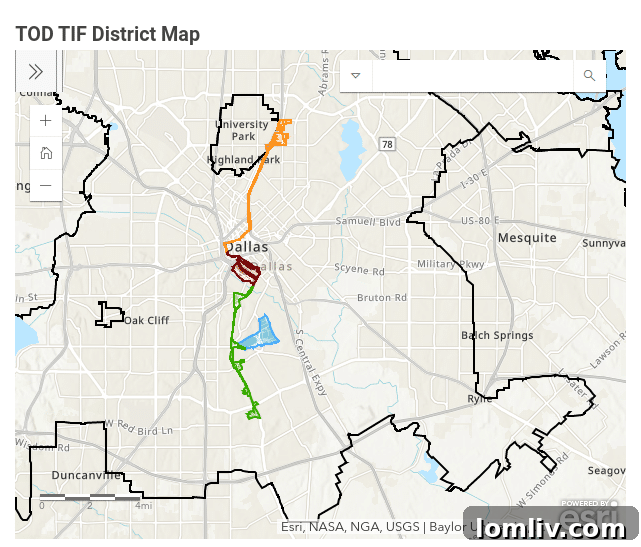
Elected leaders in Dallas have long recognized the immense intrinsic value and transformative potential of transit-oriented development as a cornerstone of future urban prosperity. The concept was extensively debated, meticulously planned, and ultimately endorsed when the Dallas City Council decisively approved the landmark Hensley Field Master Plan in December. This highly ambitious plan envisions the creation of more than 5,700 new housing units in District 3, specifically designed to be seamlessly integrated with future transit infrastructure, serving as a prime, forward-looking example of how Dallas is strategically planning for dense, walkable, and transit-friendly communities that cater to a growing population.
The profound economic impact of TOD in the North Texas region has been robustly and convincingly demonstrated by rigorous academic research. A comprehensive study conducted by the esteemed Economics Research Group at the University of North Texas meticulously analyzed the profound influence of transit-oriented development on the North Texas economy. The compelling findings revealed significant contributions to sustained job growth, increased overall economic value, and enhanced property values across the entire metropolitan area. Specifically, researchers reviewed 81 distinct development projects completed between 2016 and 2018, all strategically situated within a quarter-mile radius of existing DART stations. These projects collectively boasted a total property value exceeding an impressive $5.1 billion, showcasing the immense financial return, urban revitalization, and sustained economic momentum spurred by strategic public transit investment. This powerful body of evidence undeniably reinforces that successful, collaborative partnership between DART and the City of Dallas is not merely about resolving current disputes; it is fundamentally about ensuring the continued prosperity, accessibility, and sustainable growth of one of America’s fastest-growing and most dynamic metropolitan areas for generations to come.