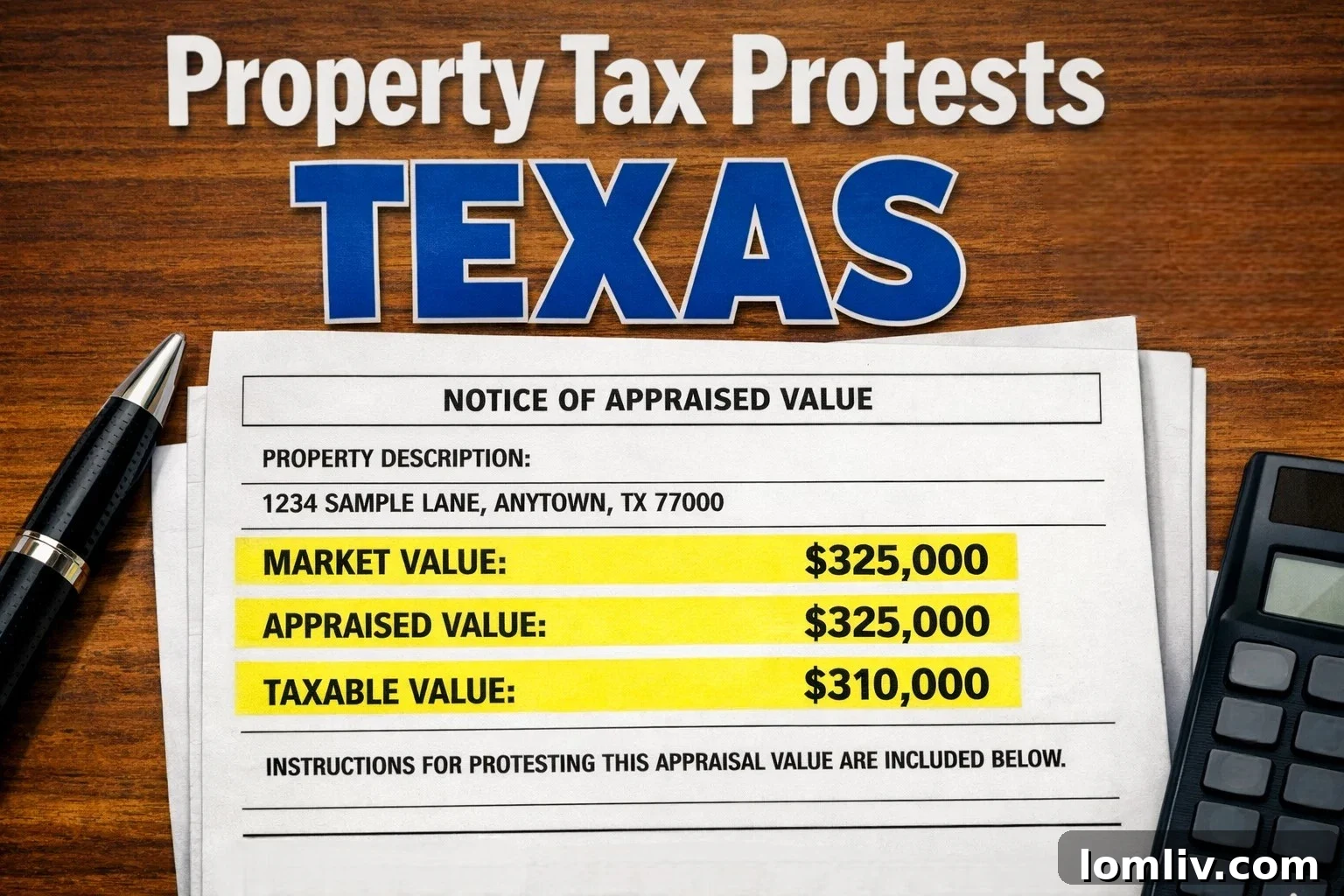
For countless Texans, the dream of homeownership often comes with a significant recurring cost: property taxes. While Texas boasts the advantage of not levying an individual income tax, its property taxes consistently rank among the highest in the nation. This financial reality makes understanding and actively managing your property tax burden an essential aspect of responsible homeownership. Yet, a surprising number of Texas homeowners, perhaps unaware of the process or simply overwhelmed, bypass the annual property tax protest season, inadvertently missing a golden opportunity to reduce their housing expenses and keep more of their hard-earned money.
Navigating the complex world of property valuations and tax protests can seem daunting, but it’s a fundamental right for every Texas property owner. By taking proactive steps, you can challenge an unfairly high appraisal and ensure your home is taxed equitably. This comprehensive guide aims to demystify the process, highlight critical reasons why protesting is beneficial, and provide actionable insights to help you potentially lower your Texas property tax bill.
Decoding Your Property Tax Appraisal Notice: Key Terms to Understand
Before embarking on the property tax protest journey, it’s crucial to understand the language of your appraisal notice. This document, sent by your County Appraisal District (CAD), contains vital information that forms the basis of your property tax liability. Familiarizing yourself with these key terms will empower you to identify potential discrepancies and build a stronger case for your protest.
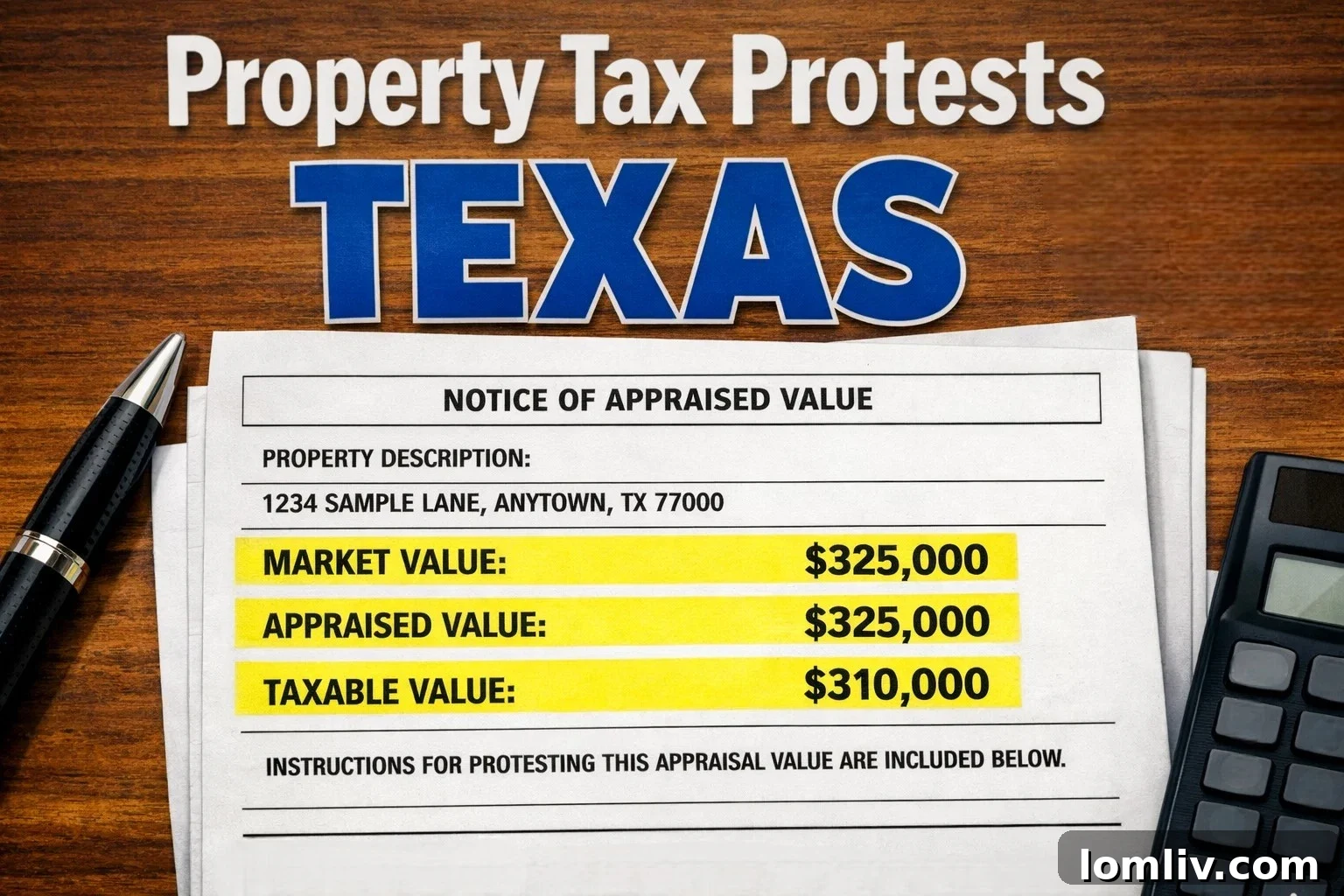
- Market Value: This figure represents the estimated price your home would likely sell for on the open market, assuming a willing buyer and a willing seller under typical conditions. It’s an assessment of your property’s value as if it were to be listed for sale.
- Appraised Value: This is the value officially assigned to your property by the County Appraisal District. While it ideally should reflect the market value, the mass appraisal models used by CADs can sometimes lead to discrepancies. This is the value against which you will be protesting.
- Taxable Value: This is the final amount your property is taxed on, calculated after all applicable exemptions have been applied to the appraised value. A lower taxable value directly translates to a lower property tax bill.
Understanding these distinctions is paramount. Your protest primarily targets the Appraised Value. By successfully reducing this figure, and ensuring all exemptions are in place, you can significantly impact your Taxable Value and, consequently, your annual property tax obligations.
Maximize Your Savings: Confirm Your Property Tax Exemptions
One of the most effective ways to lower your property tax burden, often overlooked, is by ensuring all eligible exemptions are properly applied to your property. Exemptions reduce the taxable value of your home, directly translating into savings. If you haven’t already, filing for the appropriate exemptions is a crucial step before or during the protest season.
If this home is your primary residence, make sure your homestead exemption is on file. In 2026, Texas school districts provide a substantial $140,000 general residence homestead exemption. This means that a significant portion of your home’s appraised value is excluded from taxation by school districts, which typically represent the largest portion of your property tax bill. Homeowners who are 65 or older or disabled receive an additional $60,000 school district exemption, offering further financial relief. It’s important to remember that appraisal districts determine property values, while local taxing units (like cities, counties, and school districts) are responsible for setting the actual tax rates based on those values.
Beyond the general residence homestead exemption, Texas offers several other exemptions that can further reduce your taxable value, including:
- Over-65 Exemption: For homeowners aged 65 or older, offering an additional deduction and a tax ceiling for school taxes.
- Disabled Person Exemption: Similar benefits to the over-65 exemption, available to qualifying disabled homeowners.
- Disabled Veteran Exemption: Offers varying levels of exemption based on the veteran’s disability rating.
- Surviving Spouse Exemption: For the surviving spouse of a qualifying individual.
Always verify with your local County Appraisal District that all eligible exemptions are correctly applied to your property. Missing out on these can lead to unnecessarily high tax bills. Filing for a new homestead exemption is typically a one-time process, but it’s wise to double-check its status annually.
Why Protesting Your Texas Property Taxes is a Smart Financial Move
Many homeowners hesitate to protest, often due to misconceptions or a lack of understanding of the significant benefits. Here are five compelling reasons why protesting your Texas property taxes is not just a right, but a savvy financial strategy.
1. Appraised Value is Not Synonymous with Your Home’s True Market Value
A common apprehension among homeowners is that by successfully reducing their appraised value for tax purposes, they might inadvertently signal a lower market value for their home, potentially impacting future sale prices. This is a significant misconception in the Texas real estate market. The appraised value assigned by the County Appraisal District is primarily for tax assessment purposes and does not dictate or directly influence your home’s market value when it comes time to sell. Real estate transactions are driven by market demand, comparable sales, and the property’s condition, not by its tax appraisal.
There is absolutely no risk in Texas for you to protest your property’s appraised value annually. In fact, there’s only an upside. A lower appraised value means a lower taxable value, directly translating to tangible savings on your annual property tax bill. This distinction is vital for Texas homeowners to grasp: protesting your property taxes is a financially beneficial action with no negative repercussions on your property’s actual market worth. The appraisal district’s valuation methodology often differs significantly from how a real estate agent or a private appraiser would determine a home’s worth for a sale.
2. New Homeowners Have a Unique and Powerful Incentive to Protest
If you’ve recently purchased a home in Texas, you might find yourself in an especially advantageous position to protest your property’s appraisal. County Appraisal Districts (CADs) manage millions of properties across the state, and they simply do not possess the resources to conduct individual, on-site appraisals for every single home each year. Instead, they heavily rely on sophisticated mass appraisal models, which process vast datasets of sales information, property characteristics, and economic indicators.
However, these models are not infallible. They can sometimes operate with outdated information, rely on imperfect comparable sales data, or miss crucial details about individual properties. This often means that new homeowners, who may have recently purchased their home for, say, $420,000, could surprisingly receive an appraisal notice assessing their property at a higher value, perhaps $465,000. This disparity frequently arises due to lag times in data updates or the use of “bad” or unsuitable comparisons by the CAD.
For new homeowners, protesting in the very first year of ownership is critically important. A successful protest establishes a lower baseline appraised value early on. Given the caps on how much your appraised value can increase each year (the 10% homestead cap for primary residences), setting a lower starting point can significantly reduce your property tax bills for many years to come, offering substantial long-term savings. Don’t let the initial appraisal dictate your future tax burden; seize the opportunity to reset it.
3. Leverage the “Unequal Appraisal” Argument for Texas Property Tax Protests
In Texas, your options for challenging your property’s appraisal extend beyond simply arguing that its market value is too high. A powerful and often more successful angle for protest is the “equal and uniform” or “unequal appraisal” argument. This principle, firmly rooted in Texas law, allows you to challenge whether your home has been appraised at a higher value than similar homes in your immediate neighborhood or comparable market area.
The core of an unequal appraisal argument is fairness. If you can demonstrate that properties strikingly similar to yours – in terms of size, age, condition, features, and location – are appraised at a significantly lower value, you have a strong legal basis for demanding a reduction in your own appraisal. This approach requires more than just a feeling that your number is too high; it demands solid evidence, specifically well-researched comparable properties with lower appraised values.
To build a compelling unequal appraisal case, you’ll need to gather data on properties that are truly comparable. This means looking for homes that share:
- Similar square footage and lot size.
- Similar construction year and architectural style.
- Comparable number of bedrooms and bathrooms.
- Similar condition and amenities (e.g., pool, garage).
- Close proximity to your property.
By presenting a robust list of these “unequally” appraised properties, you can effectively demonstrate that your home’s valuation deviates from the standard set for similar properties, compelling the appraisal district to adjust your assessment downwards. This nuanced approach often yields better results than simply disputing the market value based on subjective assessments.
4. Protesting Isn’t Just About This Year’s Tax Bill – It’s a Long-Term Investment
Many homeowners view the property tax protest as a single-year battle, solely focused on reducing the current year’s tax liability. While immediate savings are certainly a primary motivator, the benefits of a successful protest in Texas can extend far beyond a single tax bill, making it a strategic long-term financial investment.
A lower appraised value achieved through a successful protest can have a cascading positive effect on subsequent years’ tax bills. This is particularly true because of the homestead cap, which limits the annual increase in your appraised value to 10% for primary residences. If you establish a lower baseline value in one year, that lower base dictates the starting point for future increases, meaning your property taxes will compound from a reduced figure over time, leading to significant cumulative savings.
Furthermore, some forward-thinking County Appraisal Districts (CADs), such as Bexar County, are beginning to acknowledge and honor successful protest appraised values for the subsequent year as well. This innovative approach offers even greater incentive for homeowners to protest, as a single successful effort could potentially yield multiple years of tax benefits without requiring an annual re-protest. This trend, if adopted more widely, transforms protesting into an even more powerful tool for long-term property tax management. By investing time and effort into a protest, you’re not just saving money this year; you’re building a foundation for lower property taxes for the foreseeable future.
5. The May 15th Deadline for Texas Property Tax Protests Arrives Quickly
One of the most critical factors in successfully protesting your Texas property taxes is adhering to the strict deadlines. The general deadline for filing a property tax protest in Texas is May 15th, or 30 days after your appraisal district mails your notice of appraised value, whichever date is later. Despite widespread advertising and growing awareness surrounding Texas tax protests, this crucial date often sneaks up on homeowners, leading to missed opportunities and forfeited savings.
Missing this deadline means you lose your right to formally dispute your property’s valuation for the current tax year, locking you into potentially higher tax payments. The process of gathering evidence, preparing your case, and submitting the necessary forms takes time. It’s not something that can be effectively rushed in the final days or hours before the deadline.
Therefore, developing a clear plan well in advance is essential. Decide early whether you intend to undertake the protest process yourself or enlist the expertise of a professional property tax agent, such as my firm, Resolute Property Tax Solutions. Starting early allows ample time to review your appraisal notice thoroughly, gather robust comparable sales data, document any property damage or unfavorable conditions, and formulate a compelling argument. Procrastination is the enemy of a successful protest; vigilance regarding the deadline and proactive preparation are your strongest allies in securing a lower tax assessment.
Your Smart First Year Property Tax Protest Checklist
Embarking on your first property tax protest can feel overwhelming, but a structured approach can simplify the process and increase your chances of success. Here’s a checklist to guide you through the initial steps and ensure you’re well-prepared.

- Thoroughly Review Your Appraisal Notice: Don’t just glance at the value. Scrutinize every detail. Look for inaccuracies in square footage, lot size, number of bedrooms/bathrooms, year built, overall condition assessment (e.g., excellent, good, fair, poor), and any special features listed. Even minor errors can impact your valuation.
- Identify Truly Comparable Properties: This is the cornerstone of any strong protest. Use your County Appraisal District’s website, online real estate platforms, or consult with a real estate agent to find homes that have recently sold or are currently appraised at lower values, yet are highly similar to yours in age, size, condition, and location. Focus on properties within your immediate neighborhood or subdivision.
- Confirm Your Homestead Exemption is Filed: If this property is your primary residence, ensure your homestead exemption is actively applied. If it’s not, file for it immediately with your CAD. This exemption significantly reduces your taxable value.
- Decide on Your Protest Strategy Early: Determine whether you will protest on your own or seek professional assistance. Self-protesting requires time and diligence in gathering evidence and presenting your case. Hiring a property tax agent can save you time, leverage their expertise, and potentially lead to greater savings. Make this decision well before the deadline.
- Begin Gathering Evidence Without Delay: Do not wait until the last week before the deadline. Start collecting all necessary documentation as soon as you receive your appraisal notice. This includes photos of any damage or deferred maintenance on your property, repair estimates, recent sales data for comparable homes, and potentially an independent appraisal if you’re disputing market value significantly.
By following this checklist, you’ll be well-positioned to approach your property tax protest with confidence and a strong, evidence-backed case, maximizing your potential for significant savings on your Texas property taxes.
In conclusion, understanding and actively engaging in the Texas property tax protest process is not merely an optional task; it’s a critical component of smart homeownership and financial planning in the state. With property taxes representing a substantial financial outlay, the opportunity to reduce your burden through an informed protest should not be overlooked. Whether you’re a new homeowner, a long-time resident, or simply seeking to ensure fair taxation, the process offers a tangible pathway to lower housing costs. Arm yourself with knowledge, prepare your evidence, and don’t hesitate to utilize the resources available, including professional assistance, to challenge your appraisal. Taking action now can lead to significant savings for years to come.
About the Author:
Ed Buser is the President of Resolute Property Tax Solutions, a leading firm based in Dallas, Texas. Since 2010, Resolute has successfully managed property tax protests for thousands of homebuyers across the state of Texas. In 2025, their client success rate reached an impressive 84%, with an average tax savings of $1,945 per customer, all while maintaining a stellar 4.8-star average across more than 1,200 Google Reviews. If you want to learn more about how Resolute can help you lower your Texas property taxes, you can visit ResolutePTS.com.