Dallas City Council Approves Landmark $41 Million TIF for Historic Cabana Hotel Redevelopment into Mixed-Income Housing
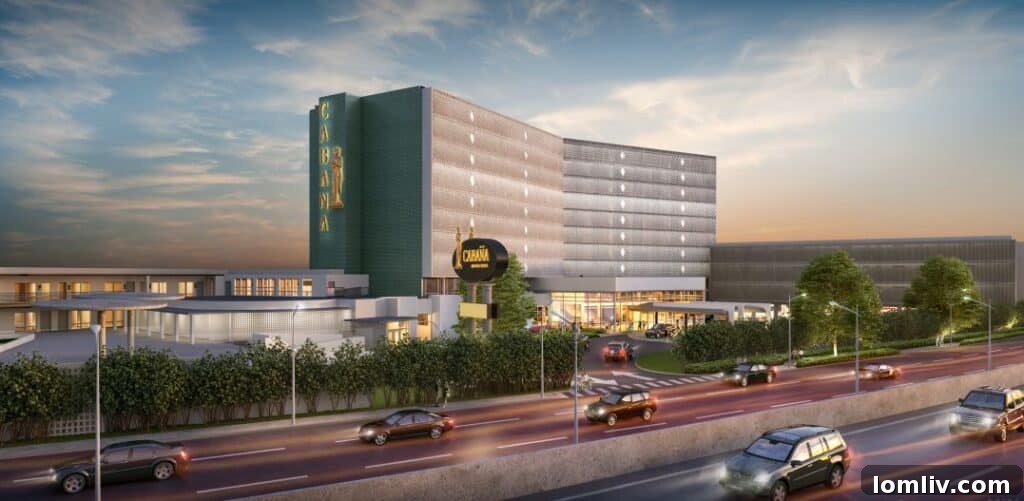
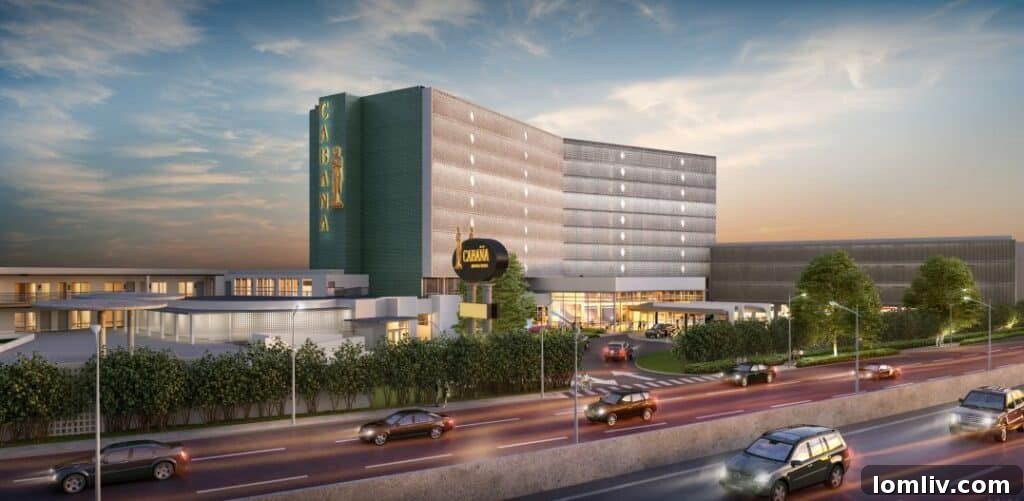
Dallas, TX – In a significant move set to reshape a pivotal segment of the city’s urban landscape, the Dallas City Council has officially sanctioned a substantial $41 million in Tax Increment Financing (TIF) funds. This critical investment is earmarked for the ambitious redevelopment of the former Cabana Hotel, a beloved landmark with a storied past, into a vibrant mixed-income housing community. The approval, which came on a recent Wednesday, signals a strong commitment from the city to addressing its growing housing needs while preserving historical integrity and fostering economic revitalization.
The catalytic project, spearheaded by developer Zach Krochtengel of Cabana Sycamore Development Inc., represents a formidable $116 million endeavor. This comprehensive redevelopment will breathe new life into a 3.27-acre parcel situated at 899 North Stemmons Freeway, a strategic location within Dallas’s dynamic Design District. The developer’s request for TIF funds underscores the financial complexities of such large-scale urban renewal projects, where public-private partnerships become indispensable tools for achieving community-centric goals.
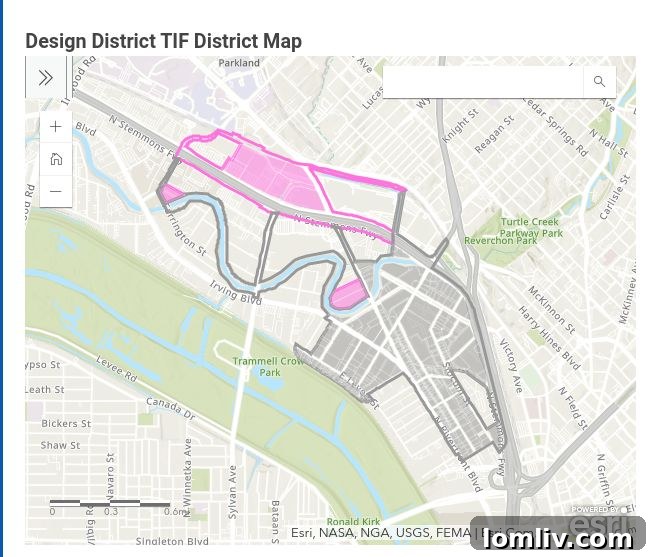
The former Cabana Motor Court Hotel is strategically located within the boundaries of the Design District’s Tax Increment Financing District. This designation is crucial, as it allows developers to access funds generated from property taxes collected within the TIF zone itself. These funds are specifically allocated for reinvestment purposes, encouraging development and public improvements that might otherwise be financially unfeasible. The TIF mechanism creates a virtuous cycle, where new development increases property values, generating more tax revenue that can then be reinvested into further improvements and projects within the district.
The disbursement of the TIF funds will follow a carefully structured schedule, designed to mitigate risk and ensure project milestones are met. According to Economic Development Director Robin Bentley, an initial $5 million will be distributed to the developer upon the successful acquisition of the property. A further $5 million will be released once the project reaches 50 percent completion. The significant remainder of the funding will then be paid out only after the entire building is complete and achieves a 70 percent occupancy rate, providing strong incentives for timely and successful project delivery.
This project is particularly noteworthy for its substantial contribution to affordable housing in an area with a critical shortage. Current city documents reveal a stark reality within the Design District TIF zone: out of 3,041 existing residential units, a mere 63, or 2 percent, are income-restricted. This glaring disparity highlights the urgent need for accessible housing options within this rapidly gentrifying urban core.
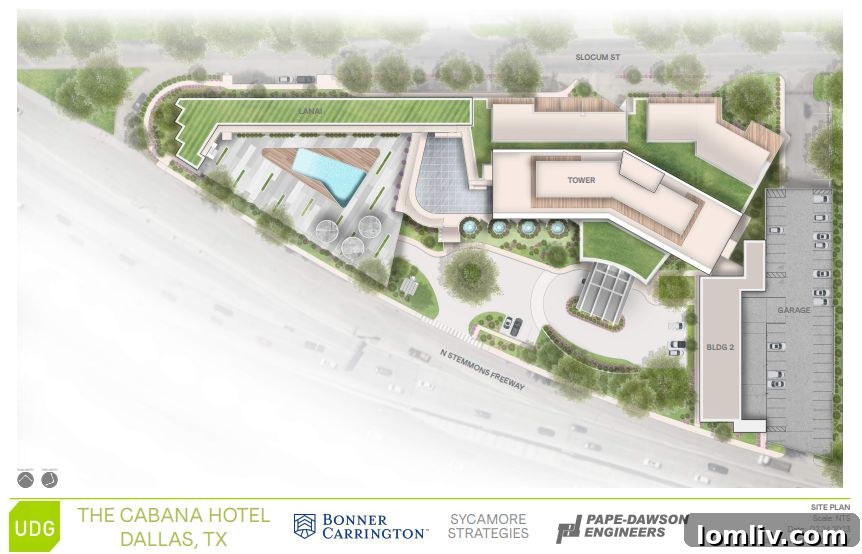
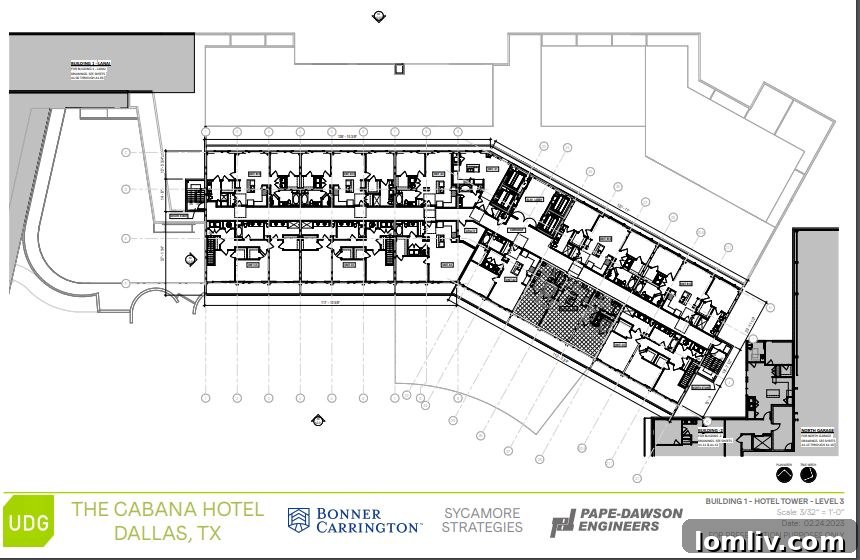
The Cabana project directly addresses this need by proposing 160 multifamily residential units. Of these, a remarkable 64 will be income-restricted, with the remaining 96 offered at market rates. This commitment means that approximately 40 percent of the development’s units will be dedicated to affordable housing – a figure that significantly surpasses typical requirements for TIF-funded projects. This progressive approach sets a new benchmark for mixed-income developments in Dallas.
During a pivotal Sept. 5 meeting of the Economic Development Committee, Councilman Omar Narvaez passionately articulated the pressing need for affordable housing in the Design District. “This would be a huge victory for this area, especially with all the new housing coming in,” Narvaez stated, emphasizing the transformative potential of the Cabana project. He further highlighted the exceptional terms of this agreement: “Typically TIF funding requires 20 percent affordability at 80 percent [Area Median Income], so this is definitely way more. It also only requires 15 years. This one will be 45 years of guaranteed affordability.” Councilman Narvaez concluded, reflecting on the building’s past, “As much as I would have loved to see the old Cabana Hotel come back, housing is much more important to us, especially in the Design District.” This sentiment underscores a pragmatic shift in priorities, recognizing that while historical preservation is valued, meeting fundamental community needs like housing is paramount.
The Cabana Hotel’s Storied Past and Its Long Road to Redevelopment
The Cabana Hotel, originally built in 1962 by the visionary Jay Sarno, the legendary founder of Caesar’s Palace, is more than just a building; it’s a repository of Dallas history and cultural lore. Its glamorous past is rife with tales of celebrity parties, hosting iconic figures such as The Beatles and Led Zeppelin, making it a focal point of the city’s social scene for decades. Its decline from a luxury motor hotel to being repurposed as a county jail, and eventually sitting vacant, mirrored broader urban challenges and changes in the Design District. In 2017, the property was acquired for a reported $8.1 million by Mehrdad Moayedi’s Centurion American Development Group, sparking hopes for its revival.
“For over a decade this building has been empty,” Narvaez lamented during Wednesday’s council meeting, underscoring the urgency of the situation. He recounted the previous attempts at revival: “There was a developer who had plans to rehab it and bring it back to its old glory, but that is no longer in their plans. [Krochtengel] came in and wants to change it into housing. What we’re missing is workforce housing.” This shift from a purely historical restoration to a housing-focused adaptive reuse project reflects an evolving understanding of urban development, prioritizing functional community needs over nostalgic aspirations when resources are limited.
Philip Kingston, a former Dallas City Councilman and the attorney representing the developer, provided further details on the project’s affordability aspects. He clarified that a significant portion, or “plurality,” of the income-restricted units are specifically designated for residents earning 30 percent of the Area Median Income (AMI). This targeting of the lowest income brackets is a crucial aspect of the project’s social impact.
Kingston eloquently explained the profound importance of these units: “That’s the level of housing that someone teetering on the brink of homelessness needs.” He further elaborated on the thoughtful design of the development, noting, “Some of those units will be three-bedroom units, allowing families in desperate need to live here.” This provision of family-sized affordable housing is particularly vital in a city grappling with a severe shortage of suitable living spaces for larger households.
From a broader financial perspective, Kingston added that while the project delivers significant affordable housing, it’s not exclusively an affordable housing project in the traditional sense, as it integrates market-rate units to create a truly mixed-income community. The project has also successfully leveraged a complex web of funding sources beyond the TIF, illustrating a robust collaborative effort. These include contributions from the Texas Department of Housing and Community Affairs (TDHCA), valuable Historic Preservation state and federal tax credits that acknowledge the building’s legacy, and direct support from the City’s Economic Development Department.
Kingston highlighted the synergistic nature of these funding streams: “You’re getting three of those big-ticket items that this council has been very focused on achieving for Dallas in one project.” He concluded, optimistically, “That, I think, is going to be the new model going forward.” This multi-layered funding approach could indeed serve as a blueprint for future adaptive reuse and mixed-income developments across the city.
Mixed-Income Apartments Draw Opposition and Spark Debate
Despite the widespread support for addressing Dallas’s housing crisis, the Cabana Hotel redevelopment project has not been without its critics. Former Dallas City Councilman Ed Oakley voiced strong opposition, raising pertinent questions about the allocation of TIF funds and the project’s overall economic feasibility. Oakley, who was in office when the Design District TIF zone was originally established, emphasized that its primary purpose was to provide infrastructure funding for public improvements, not necessarily direct housing development subsidies.
“It’s not that I’m opposed to affordable housing, it’s the amount of money that’s being allocated — $41 million to this project that’s going to cost $116 million for 160 units,” Oakley stated, articulating his economic concerns. “It doesn’t make economic sense to me.” This perspective highlights a common tension in urban development: how to balance the social benefits of affordable housing with the perceived financial efficiency of public investments.
Oakley also raised significant safety concerns regarding the location of residential units, particularly for families. He questioned the prudence of having children reside in an apartment building situated directly on a major freeway, citing potential issues with noise, air quality, and access. “I don’t understand the logic,” he said, demanding clearer justification from city officials. “Somebody needs to explain to us why you would be taking the entire TIF funds for this project … You’re now taking all the funds that were allocated for infrastructure improvements in the oldest industrial park in the City of Dallas.” This argument underscores a debate over the precise scope and priorities of TIF districts, and whether funds originally intended for broader public infrastructure can, or should, be reallocated for specific housing projects.
Further reflecting the divided opinion, the Design District TIF Board itself voted 3-1 against the deal earlier in the month, indicating a lack of unanimous consensus even among those directly involved in district oversight. This dissenting vote suggests ongoing dialogue and careful scrutiny of how such significant public funds are best utilized to serve the multifaceted needs of a growing city like Dallas.
Ultimately, the Dallas City Council’s approval of the $41 million TIF for the Cabana Hotel redevelopment represents a bold step towards a future where historical landmarks are repurposed to meet urgent contemporary needs. While challenges and debates persist, the project’s commitment to significantly increase mixed-income and affordable housing in a critical area marks a pivotal moment for urban development in Dallas, potentially setting a precedent for innovative solutions to complex housing crises.