The intricate strategic play over how to distribute a substantial $1.1 billion across Dallas’s diverse capital requirements is reaching its crescendo. As the anticipated 2024 bond election draws nearer, the critical deadline for the task force’s recommendations is now less than two months away, setting the stage for pivotal decisions that will shape the city’s future infrastructure and quality of life.
In a crucial phase of public engagement, a series of comprehensive bond town hall meetings commenced in late September, providing residents with invaluable opportunities to voice their priorities and concerns. These vital discussions are scheduled to continue through October 19th, ensuring widespread community input before final proposals are solidified.
The sheer scale of Dallas’s capital needs dramatically eclipses the $1.1 billion in available funding, creating a challenging environment for allocation. While there’s a promising outlook for housing advocates, who have steadfastly requested $200 million, the real battle looms elsewhere. District 1 Councilman Chad West articulated the intense competition to daltxrealestate.com, stating, “there’s going to be a struggle between parks and everything else.” He highlighted the ambitious target of parks advocates, who desire $400 million, noting, “Parks were funded heavily last time, and I was a part of that initiative. Everybody in my district wants parks, but we pushed back on our critical facilities last time. We funded our roads and streets, but we need to do that again.” This sentiment underscores the perpetual challenge of balancing immediate community desires with long-term infrastructure necessities.
Leading the charge for the crucial 2024 Community Bond Task Force (CBTF) is Arun Agarwal, an individual handpicked by Mayor Eric Johnson for his proven leadership. Agarwal brings a unique perspective to this role, simultaneously serving as the esteemed president of the city’s Park and Recreation board. His dual role highlights the intertwined nature of park development and broader municipal planning, placing him at the heart of the ongoing funding discussions.

Mayor Johnson expressed full confidence in his appointee, remarking, “Arun Agarwal has proven to be an effective and engaged leader in our city, and I am confident he will advocate for the right priorities for the people of Dallas on this task force.” This endorsement emphasizes the high expectations placed on Agarwal to navigate the complex landscape of competing municipal needs and stakeholder interests.
Although Agarwal was unavailable for direct comment on this specific story, he conveyed in an email to city officials the profound honor he feels in chairing the task force. He acknowledged the daunting nature of the task, stating, “Problems and needs are complex, and solutions need creative thinking.” This reflects the consensus that innovative approaches will be essential to bridge the gap between extensive needs and finite resources.
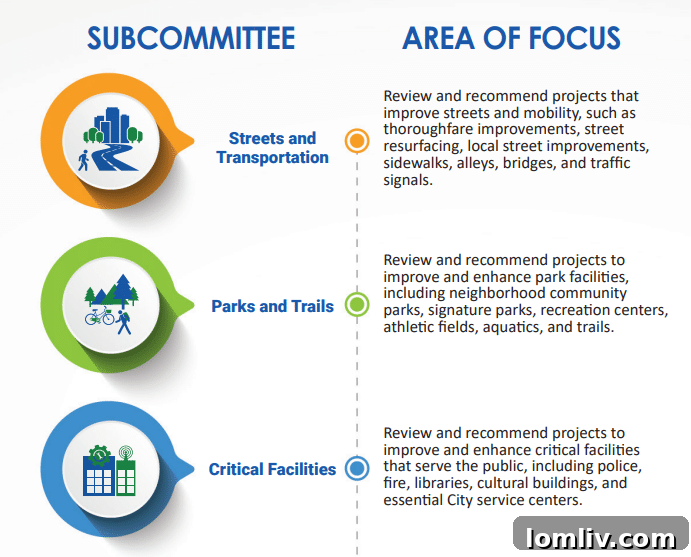
To foster transparency and community engagement, the CBTF subcommittees have meticulously curated and posted dozens of recommended projects on an intuitive interactive map. This valuable resource allows residents to explore proposed initiatives in detail, understand their scope, and grasp their potential impact across various Dallas neighborhoods.
The Stakes: Unpacking Dallas’ $1.1 Billion Bond Program for a Thriving Future
The 2024 Dallas Bond Program represents a critical investment in the city’s future, designed to fund essential infrastructure and quality-of-life projects. These general obligation bonds, once approved by voters, will empower Dallas to undertake necessary improvements without immediate tax increases, instead relying on future property tax revenues. The total capacity of $1.1 billion, an increase from an initial $1 billion projection, signals the city’s ambition to address a wide array of pressing needs, from crumbling roads to inadequate housing.
Before the formal establishment of subcommittees and the confirmation of the increased funding capacity, Dallas city staff presented an initial framework outlining possible allocation scenarios. This preliminary plan offered a glimpse into the diverse areas slated for investment, highlighting the fundamental components necessary for a modern, functional metropolis:
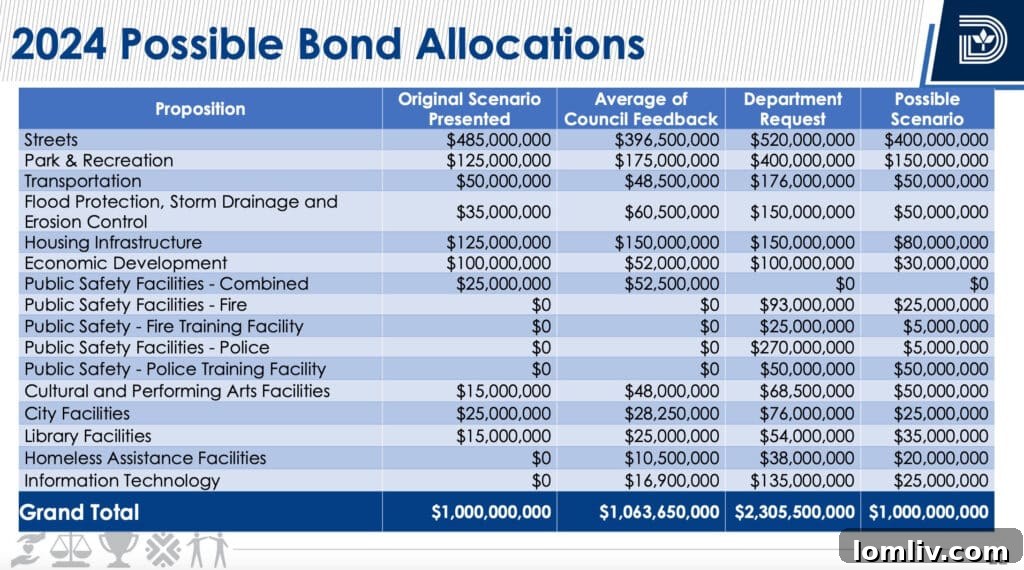
- $400 million for Streets: A significant portion dedicated to maintaining and improving the city’s vast network of roads, crucial for daily commutes, commercial traffic, and overall urban connectivity. This allocation reflects the high cost of addressing deferred maintenance and supporting growth.
- $150 million for Parks and Recreation: Essential funding for enhancing green spaces, recreational facilities, and community centers, contributing to residents’ health, well-being, and social interaction.
- $50 million for Transportation: Beyond just streets, this covers broader transportation initiatives, including pedestrian infrastructure, public transit enhancements, and traffic management systems vital for a growing city.
- $50 million for Flood Protection, Storm Drainage, and Erosion Control: Critical investments to safeguard communities from environmental hazards, mitigate flood risks, and protect existing infrastructure from long-term damage.
- $80 million for Housing Infrastructure: Directing funds towards the foundational elements needed to support new and existing housing developments, particularly in areas aiming to increase affordability and accessibility.
- $30 million for Economic Development: Strategic investments designed to stimulate local economies, attract businesses, create jobs, and foster sustainable growth across Dallas.
- $85 million for Public Safety Facilities (Police and Fire): Ensuring that the city’s first responders have modern, efficient, and well-equipped facilities to effectively serve and protect the populace.
- $50 million for Cultural and Performing Arts Facilities: Supporting Dallas’s vibrant arts scene, these funds help maintain and upgrade venues that enrich the city’s cultural landscape and attract tourism.
- $25 million for City Facilities: Investments in various municipal buildings and operational infrastructure necessary for the efficient functioning of city government services.
- $35 million for Library Facilities: Modernizing and expanding the public library system, providing essential resources for education, digital access, and community engagement.
- $20 million for Homeless Assistance Facilities: Dedicated funding to support shelters, transitional housing, and service centers for the city’s most vulnerable populations, addressing a pressing social need.
- $25 million for Information Technology: Upgrading and securing the city’s digital infrastructure, enhancing public services, and ensuring robust internal operations.
This initial framework, while comprehensive, sparked immediate debate. Parks advocates, in particular, quickly voiced their desire for a considerably larger share of the bond pie, echoing sentiments from previous cycles where the allocation of funds often becomes a battleground driven by equity considerations and the intense lobbying of various interest groups. The fundamental challenge lies in distributing funds fairly and effectively, ensuring that all vital sectors receive adequate investment to meet Dallas’s evolving needs.
The Tug-of-War: Parks, Housing, and Critical Infrastructure
The allocation of the $1.1 billion bond program has ignited a vigorous debate, particularly between advocates for parks and those championing housing initiatives, alongside the essential needs of other city services. This recurring struggle for funding during each bond election cycle reflects deeply held beliefs about how best to foster a thriving, equitable Dallas.
Councilman West’s call for city management to step in with a definitive recommendation highlights the current predicament. He articulated his desire for a more unified approach, stating, “I’d like to see the city management come in and make a recommendation. Right now, the departments are pitted against each other. It would be nice if someone — the city manager, the CFO, the head of the bond process, Dr. [Robert] Perez — would say, ‘This is what came out. Staff does or does not support this.’” This appeal underscores the need for a cohesive strategy that transcends departmental silos, aiming to reduce internal conflict and present a consolidated vision for the city’s future investments.
At the forefront of the housing advocacy movement is the Dallas Housing Coalition (DHC), a powerful alliance that has consistently pressed for a $200 million allocation from the bond funds. Their argument centers on addressing the city’s pressing affordable housing crisis, which they argue is foundational to equitable growth.
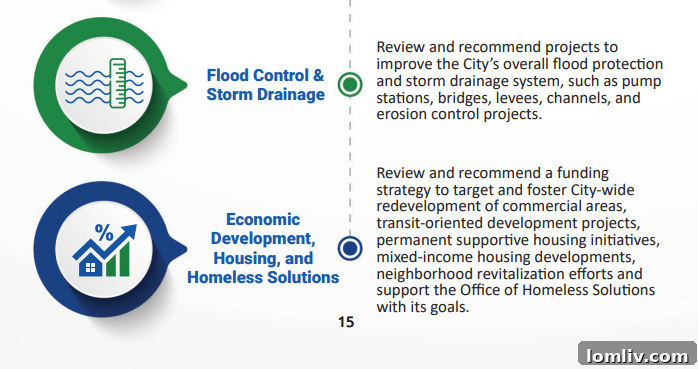
Ashley Brundage, a co-founder of the DHC and an active member of the CBTF’s Housing, Economic Development, and Homeless Solutions subcommittee, clarified the coalition’s position to daltxrealestate.com. She emphasized that her subcommittee is not operating under a zero-sum mentality, refusing to pit one essential category against another. Instead, Brundage articulated a belief in abundance.
“We feel there is enough room in a $1.1 billion dollar bond for everyone to get an impactful amount of funding,” she asserted. Brundage acknowledged the undeniable importance of parks and streets for a thriving community and the critical need for their ongoing maintenance. However, she posited a stark warning: “if we do not start to address the housing crisis in this city, the new parks and streets will quickly gentrify and displace many community members and much of our workforce.” This statement highlights the DHC’s core argument that without equitable housing, other civic improvements risk exacerbating social inequalities rather than benefiting all residents.

Brundage further detailed the collaborative efforts within the housing subcommittee, which diligently developed final recommendations. These proposals include $200 million specifically for affordable housing initiatives, a targeted $35 million for comprehensive homeless solutions, and an additional $40 million aimed at strategic economic development programs. These figures reflect a meticulously calculated approach to address interconnected urban challenges.
The Dallas Housing Coalition boasts an impressive network of over 180 members, all actively supporting these critical funding requests. Brundage expressed confidence in their collective voice, stating, “We truly believe that we have widespread support from the community in this effort.” Yet, she also acknowledged a significant hurdle: “Our biggest obstacle will be the Bond Task Force moving forward with our recommendations. We believe we have good support from many City Council members, but the task force has quite a few supporters for Parks on it.” This candid assessment underscores the ongoing challenge of balancing deeply entrenched interests within the decision-making body.
Navigating the Election Timeline: Pension Deficit and Strategic Delay
The journey towards the 2024 bond election has encountered an unexpected but significant detour concerning its timeline. Initially, the process was mapped out with a clear trajectory: recommendations from the Community Bond Task Force (CBTF) were slated for December of the current year, leading to a bond election in May 2024. This schedule was designed to allow ample time for public deliberation and a timely approval of crucial capital projects.
However, during an August council meeting, several council members raised serious concerns regarding the proposed election date. Their apprehension stemmed from a substantial outstanding issue: the city is actively working to determine whether it should seek voter approval for general obligation bonds to cover an alarming $3 billion deficit in the police and fire pension fund. Council members argued persuasively that it would be imprudent to place a capital improvements bond on the ballot without first having concrete answers and a clear path forward regarding the pension deficit. This interdependency highlights the fiscal complexities facing Dallas, where various financial obligations can significantly impact each other.
Echoing these sentiments, an influential October 2 letter from Jim McDade, president of the Dallas Fire Fighters Association, explicitly advocated for postponing the election to November 2024. McDade’s reasoning was strategically sound: “A delay from May 2024 to November 2024 is only six months, and a big benefit could be achieved in waiting until November.” He elaborated on the crucial financial implications, noting, “Dallas’ current bond rating is impacted by the looming pension issues.” McDade argued that if the pension committee successfully devises a robust funding plan that does not impose a burden on the Dallas general fund budget, a significant improvement in Dallas’s bond rating is conceivable. Such an improvement would, in turn, increase the city’s available debt capacity potentially beyond $1.5 billion, thereby allowing for a larger and more impactful general obligation bond proposition in November 2024, should the committee and city council deem it desirable. This strategic delay, therefore, is not merely about pushing a date but about optimizing the city’s financial leverage.
The following day, the Dallas Police Association issued an identical letter, underscoring the unified front of the city’s public safety entities on this critical matter and reinforcing the perceived benefits of a delayed election.
In response to the growing discourse and to clarify the city’s position, City Manager T.C. Broadnax issued a comprehensive memo on Friday. This memorandum aimed to counter what he termed a “false narrative that the City Council must choose between having a General Obligation Bond election in May 2024 or addressing the Dallas Police and Fire Pension System (DPFP) unfunded liability.” Broadnax vehemently rejected the notion of an either-or decision.
In his statement, the City Manager affirmed his unwavering commitment, declaring, “I am committed to both protecting the pension benefits of our first responders as well as addressing the infrastructure needs that our residents demand and deserve.” This firm stance from Broadnax seeks to reassure residents and stakeholders that the city is capable of, and committed to, tackling both the critical pension deficit and the urgent capital improvement needs simultaneously. The coming months will be crucial as Dallas leaders navigate these complex financial and strategic decisions, aiming to secure a prosperous and stable future for all its citizens.