The Grand Revival of 1704 West Colorado: An Oak Cliff Estate’s Historic Standoff
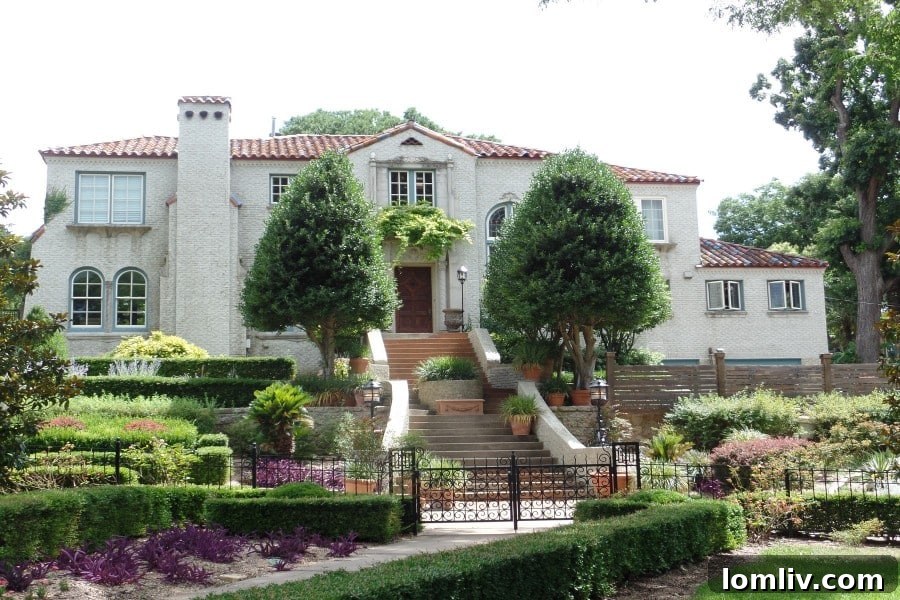
In the vibrant heart of Oak Cliff, Dallas, stands a majestic estate at 1704 West Colorado—a property revered not only for its architectural grandeur but also for the rich tapestry of stories woven into its very foundations. This iconic residence, once home to notable figures like Sergio Remirez and currently owned by Ken Row, recently found itself at the epicenter of a swirling media storm, sparking widespread speculation about its potential fate on the auction block. While whispers of an impending auction, as reported by outlets like The Dallas Morning News, ignited a frenzy among Dallas real estate enthusiasts, the true narrative behind the estate’s recent challenge is far more intricate and compelling than a simple sale. This is the story of a homeowner’s determined stand against an impersonal banking system, a testament to the emotional and historical value of a property, and ultimately, a triumph of perseverance.
A Glimpse into the Past: The Binford Legacy and Oak Cliff’s Origins
To truly appreciate the saga of 1704 West Colorado, one must delve into its storied past. Constructed in 1925, this remarkable dwelling was originally commissioned by James Robert Binford, a prominent figure in Dallas society. Even in its nascent years, the estate quickly earned a reputation as a distinguished social hub, a place where the city’s elite gathered for lavish events and sophisticated soirées. Archived records confirm its status as a veritable “party house,” with headlines from the era, such as a March 1, 1929, article announcing “Mrs. J.R. Binford Entertains With Tea,” listing an impressive attendance of 300 guests, including luminaries from as far afield as New York City. This era of glamour was presided over by Mrs. J.R. Binford, born Estelle Zang, a woman of significant social standing. Her lineage further deepened the home’s connection to Oak Cliff’s foundational history; Estelle was the daughter of John F. Zang, an early and influential developer whose contributions were so substantial that one of the area’s prominent thoroughfares, Zang’s Boulevard, bears his esteemed name. The Binford family’s legacy, intertwined with the very development of Oak Cliff, established 1704 West Colorado not merely as a house, but as a living piece of Dallas history, echoing the community’s growth and social evolution.
The Media Frenzy and the Owner’s Enigma
News of a potential auction for such a historically significant and visually stunning property sent ripples through the Dallas community. Robert Wilonsky’s captivating report in The Dallas Morning News ignited public interest, drawing attention to the 90-year-old estate’s architectural splendor and its place among Dallas’s most beautiful homes. Prompted by the widespread speculation, local publications like The Advocate also picked up the story, intensifying the buzz. Naturally, this surge in public interest led many to inquire about the home’s future. When we reached out to the current owner, Ken Row, a man widely regarded for his gracious nature and quiet demeanor, his response was both intriguing and measured. Acknowledging the unfolding drama, Ken hinted at a deeper narrative, stating, “I think we should wait to see how this movie ends… I think you can see from the facts available…this has been a calculated decision… I’m impressed you bird dogged me here.” His words, cloaked in a sense of strategy, suggested that the public perception of an imminent auction was merely one act in a larger, more complex play. This enigmatic statement only fueled further curiosity, pushing us to uncover the true motives behind the unfolding events.
An Unconventional Tactic: Ken Row’s Strategic Stand
Following Ken Row’s cryptic remarks, he directed us to his attorney, Dax Richards, a pivotal figure in unraveling the mystery. Dax swiftly clarified the situation: the house, 1704 West Colorado, was emphatically *not* destined for the auction block. He reassured us that the full story, once revealed, would be far less sensational than prevailing rumors suggested. As it turned out, Ken Row, facing challenges with refinancing his interest rate, had employed an unconventional and bold strategy to capture the attention of his mortgage holder, Bank of America (with a separate company handling loan servicing). In an attempt to engage the bank and move beyond automated processes, Ken opted to temporarily withhold a few mortgage payments. This tactic, while sometimes utilized in commercial property dealings to force a dialogue, is fraught with significant risks in the residential sector. The post-Great Recession era, scarred by widespread foreclosures, has made residential banks particularly sensitive and swift to react to such actions. Unsurprisingly, the bank’s initial, default response to the missed payments was to initiate foreclosure proceedings, triggering the very auction buzz that captivated Dallas.
Navigating the Labyrinth: Residential vs. Commercial Mortgage Realities
Dax Richards provided crucial insight into the stark differences between commercial and residential mortgage practices. “Regulations give you certain channels at banks right now, which are different than commercial,” he explained. This distinction highlights the profound challenges homeowners often face when dealing with large financial institutions. Unlike commercial property owners who might have direct access to relationship managers and more flexible negotiation avenues, residential homeowners often find themselves navigating an impersonal bureaucratic labyrinth. The experience of attempting to resolve complex mortgage issues with a major bank can be notoriously frustrating; it’s akin to “moving Mt. Everest” just to reach a live person on the phone, as many aggrieved homeowners can attest. Dax aptly summarized the core issue: “Bank decision making goes through a tree the computer holds. This was an attempt to get some attention from a bank and get a human to talk to them.” Ken’s drastic action was, in essence, a desperate “scream” for human interaction, a plea to bypass automated systems and engage in meaningful negotiation for a more favorable refinancing rate. He was leveraging the property’s immense value and equity—having paid $1.1 million for it in 2000, and despite subdividing and selling the back house, still retaining a significant 9/10ths of an acre—as a bargaining chip to force a human review of his situation.
The Resolution: A Triumph of Communication and Equity
Fortunately, Ken Row’s unconventional tactic, while risky, ultimately achieved its intended purpose. Dax Richards confirmed that the bank, to their credit, eventually recognized the homeowner’s true intent—not to defraud, but to engage in a genuine effort to adjust his financing. The bank understood that Ken was not a “scofflaw” and swiftly initiated reinstatement papers. Despite a slight delay in removing the auction listing from websites—possibly due to holiday schedules or automated site protocols that simply cross off listings rather than deleting them—Dax had multiple emails and phone confirmations affirming Ken’s reinstated ownership of his cherished Oak Cliff home. The bank’s ultimate decision reflected a sensible understanding: fully reinstating a loan on a property known as one of Dallas’s most beautiful and held by an owner with substantial equity was undoubtedly the best course of action. This resolution underscores the power of persistent advocacy and the eventual triumph of human understanding over rigid, automated processes, even within the complex world of finance. It was a victory not just for Ken Row, but for the principle that homeowners deserve a genuine channel for communication and resolution with their mortgage providers.
A New Chapter and Lasting Impressions
The dramatic journey of 1704 West Colorado has undeniably etched a new chapter into its already rich history. The intense media attention surrounding its near-auction, sparked by Ken Row’s bold strategy, has not only secured the home’s future but also raised intriguing questions about property owner tactics. Could Ken have inadvertently pioneered a drastic yet effective new method for homeowners to gain the attention of large, often impersonal, financial institutions? This episode serves as a powerful reminder of the deep emotional and historical connections people have with their homes, especially those imbued with such a legacy as this magnificent Oak Cliff estate. While we may have initially disappointed those who were eagerly anticipating an auction, the true story of 1704 West Colorado is far more satisfying: a testament to resilience, strategic thinking, and the enduring value of a beloved property. It stands as a beacon of Oak Cliff’s architectural heritage, its continued presence a reaffirmation of community spirit and the irreplaceable character of historic Dallas real estate. The saga ensures that this beautiful home will continue to grace West Colorado for generations to come, its story now richer with a tale of modern-day determination.
Here are some more photos capturing the timeless beauty of 1704 West Colorado: