The Shifting Landscape of the U.S. Real Estate Market: Price Growth, Inventory Challenges, and Future Outlook
The United States real estate market finds itself at a fascinating crossroads, currently bombarded by a cacophony of conflicting reports and expert opinions. On one side, optimistic forecasts predict unprecedented growth in home prices, painting a picture of a robust market poised to bolster the nation’s economic recovery. This narrative suggests that rising property values are a sign of health, reflecting strong demand and consumer confidence. However, a contrasting view cautions against placing too much reliance on the housing sector, arguing that the market’s current trajectory might be unsustainable and could lead to significant financial vulnerabilities down the line. Understanding these diverse perspectives is crucial for anyone navigating the complexities of buying, selling, or investing in real estate today.
Analyzing Current Trends: CoreLogic’s Home Price Index (HPI)
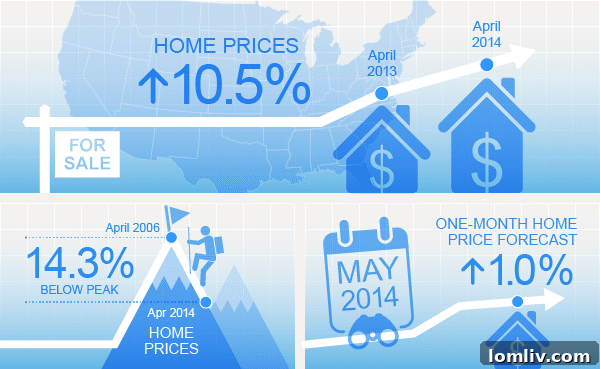
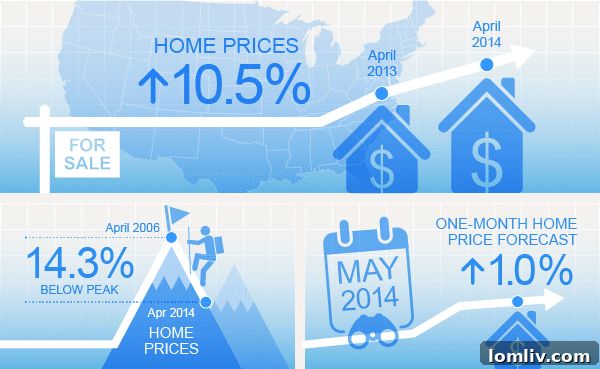
To shed light on these debates, we turn to authoritative data. CoreLogic, a leading global property information, analytics, and data-enabled solutions provider, recently released its Home Price Index (HPI) report, offering a detailed snapshot of the market. The most recent CoreLogic HPI revealed a significant 10.4 percent year-over-year increase in Dallas-area home prices. This robust local performance mirrors national figures, which recorded an impressive 10.5 percent year-over-year rise in home values across the U.S. These statistics, particularly from the April 2014 HPI report, place Dallas among nine U.S. metropolitan areas that experienced double-digit growth compared to the previous year ending in April.
The report highlighted several standout markets. Riverside, California, topped the list with a substantial 19.7 percent increase, demonstrating exceptionally strong demand in that region. Houston followed closely, securing the third position with a 14.7 percent year-over-year surge, indicative of its burgeoning economic landscape. Dallas, firmly positioned in seventh place among these top performers, underscores the intense competition and rising values characterizing its local market. These figures suggest a widespread upward trend in home valuations, signaling a period of accelerated appreciation in many key urban centers across the country.
The Inventory Conundrum: A Driver of Price Escalation
While rising prices might seem unequivocally positive, the underlying causes warrant closer examination. Anand Nallathambi, President and CEO of CoreLogic, offered a critical insight into these dynamics in a June 3 press release: “Home prices are continuing to rise as we head into the summer months. The purchase market continues to suffer from a dearth of inventory which we expect will continue to drive prices up over the year.” This statement points to a fundamental issue: a severe shortage of available housing for sale. When demand outstrips supply, prices naturally escalate. This scarcity of inventory is not merely a transient phase but appears to be a persistent factor shaping the current market. It raises crucial questions about market accessibility and the long-term health of the housing sector.
This “dearth of inventory” presents a dual-edged sword. On one hand, existing homeowners benefit from increased equity, enhancing their financial positions. On the other hand, it creates significant hurdles for prospective buyers, especially first-time purchasers, who face escalating costs and fierce competition. The concern is whether this “new normal” – a market characterized by high prices driven by low inventory – is sustainable or merely setting the stage for future instability. Can the U.S. housing market truly support a broader economic comeback if a significant portion of its population finds homeownership increasingly out of reach? This brings us to a pressing question: how do we navigate this environment to prevent another market downturn or a severe affordability crisis?
The End of the “Trade-Up” Game: A Skeptical View from Keith Jurow
For those grappling with these concerns, the analysis offered by Keith Jurow, a respected real estate analyst and publisher of the Capital Preservation Real Estate Report, provides a sobering perspective. Jurow argues that a foundational mechanism that historically underpinned the U.S. housing market’s growth has effectively ceased to function. His central thesis revolves around the dramatic decline in the ability of homeowners to “trade up” from their starter homes, a phenomenon that has severely curtailed housing inventory.
During the roughly 50 years of rising home prices, the first-time buyer was the foundation of the housing market boom. This younger buyer would purchase a home which was smaller and less expensive than most houses. That would enable the seller to “trade up” to a larger, nicer home. These trade-up sellers would then buy and enable another trade-up buyer to do the same.
This trading up was possible because the seller almost always posted a profit on the sale of the house and could plow that into a more expensive home. When the bubble finally burst in late 2006, speculators dumped their properties on the market in metro after metro and prices no longer rose.
Listings soared and sales slowed down even in the hottest markets. Then prices began to decline. That posed a serious problem for the trade-up buyer. Many of them found that they had little or no profit with which to buy another home. A growing number found themselves “underwater.” Because they had put little or nothing down, the value of their home was less than the mortgage on the property.
Making matters worse was that after the sub-prime collapse in the spring of 2007, lenders finally tightened up their underwriting standards. They began to demand down payments as in the pre-boom days – 20% or even more. With little or no profit garnered from selling, would-be buyers could not come up with such a steep down payment. Nor could the first time buyer.
And so the trade-up game came to a screeching halt. It has never returned. You need to understand that it will not be coming back. Do I mean never? Not quite. My answer — not for a long, long time.
Historical Foundation of the “Trade-Up” Dynamic
Jurow meticulously explains the historical engine of the housing market. For approximately five decades, from the post-war era through the early 2000s, the “first-time buyer” was the bedrock of booming housing markets. These younger individuals typically purchased smaller, more affordable starter homes. This transaction, in turn, allowed the sellers of these starter homes to leverage their accumulated equity and “trade up” to larger, more desirable properties. This process created a continuous chain reaction: each trade-up buyer became a seller, enabling another buyer further up the chain to acquire a more expensive home. This cycle was sustained by consistent home price appreciation, ensuring sellers almost always realized a profit, which they could then reinvest into their next purchase. This robust and fluid movement of properties was instrumental in maintaining a healthy and dynamic housing inventory.
The Bubble Burst and Its Profound Impact
The stability of this system was shattered with the bursting of the housing bubble in late 2006. As speculative investments dried up and properties flooded the market, particularly in previously “hot” metropolitan areas, the relentless upward trajectory of prices came to an abrupt halt. Listings surged, sales volumes plummeted, and subsequently, home prices began a steady decline. This dramatic shift created an existential crisis for the “trade-up” buyer. Many homeowners discovered that their properties had little to no accrued profit, effectively eliminating the capital needed for a larger down payment on a new home. Even worse, a significant portion found themselves “underwater,” meaning the outstanding balance on their mortgage exceeded the current market value of their property, making selling financially impossible without incurring substantial losses.
Tightened Lending Standards: The Final Blow
The situation was compounded by a drastic tightening of lending standards in the aftermath of the sub-prime mortgage collapse in the spring of 2007. Lenders, reeling from the crisis, reverted to more stringent underwriting practices reminiscent of pre-boom days, often demanding substantial down payments of 20% or even more. This shift effectively locked out a vast segment of potential buyers. Without significant equity from a previous sale, or substantial savings, both the would-be trade-up buyer and the aspiring first-time buyer found themselves unable to meet these stringent financial requirements. The intricate “trade-up game,” which had fueled market fluidity and inventory turnover for decades, thus came to a definitive and “screeching halt,” according to Jurow.
Jurow’s emphatic conclusion is that this fundamental dynamic “has never returned” and “will not be coming back” for “a long, long time.” This assertion is not merely a pessimistic outlook but a critical analysis of structural changes within the housing finance system and shifts in consumer behavior that he believes are deeply entrenched.
Navigating the Future: Implications for Investors and Buyers
It is under this stark assumption – that the historic engine of housing liquidity is broken – that Jurow advises investors to consider divesting themselves of their properties before the market weakens further. This recommendation, while aimed at capital preservation for individual investors, introduces a complex dynamic. If a substantial number of investors were to follow this advice simultaneously, it could trigger a significant increase in housing inventory across the market. While this might indeed drive prices down in the short term, it also highlights the delicate “balancing act” required to maintain market stability.
From the perspective of ordinary homebuyers, particularly in areas like the Dallas metropolitan region, an increase in inventory could be a much-needed relief from the current “inventory woes.” More available properties would translate into greater choice and potentially more affordable prices, shifting the market power slightly back towards buyers. Accepting inflated prices as the “new normal” in a constrained market means continued challenges for affordability and accessibility. A more balanced market, even if it entails some price adjustments, could ultimately lead to a healthier, more sustainable housing environment where a broader segment of the population can achieve homeownership.
The dichotomy between short-term gains driven by scarcity and long-term market health rooted in affordability and accessibility remains a central tension. As policymakers, real estate professionals, and consumers, it is imperative to critically evaluate these trends. Are we witnessing a temporary market imbalance, or are we experiencing a fundamental shift in the U.S. housing market that demands new strategies and approaches? The answers will profoundly shape the economic landscape for years to come.
What do you think? How should regions like Dallas address their inventory challenges, and what implications do these divergent expert opinions hold for the future of the U.S. real estate market?